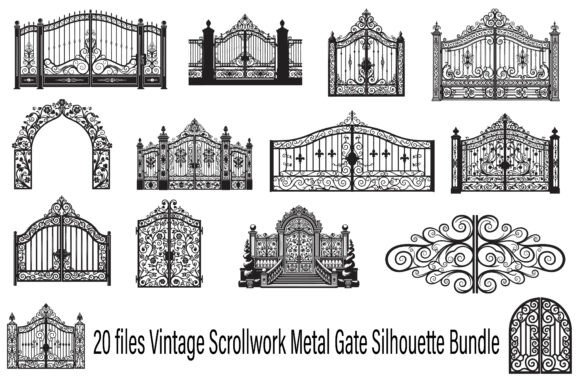
Vintage Scrollwork Metal Gate Silhouette
First Impression: Elegant, Refined, and Quietly Commanding
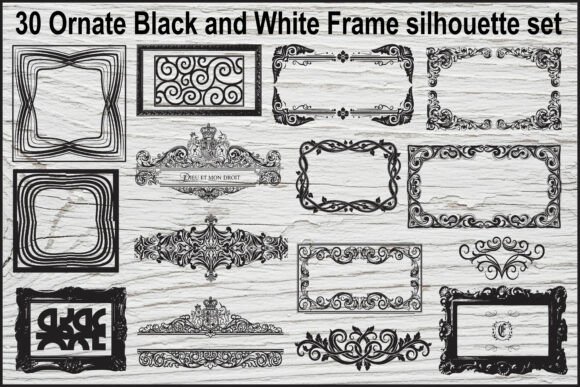
When I opened the Vintage Scrollwork Metal Gate Silhouette bundle, what struck me wasn’t just the detail—it was the *intention*. These aren’t clipart gates slapped onto a canvas. They’re ornamental ironwork translated into clean, confident silhouettes—curving scrolls, balanced negative space, and rhythmic repetition that feels both historic and effortlessly modern. As an embroidery designer who’s stitched everything from monogrammed baby onesies to boutique aprons, I immediately sensed this collection’s quiet versatility: it doesn’t shout; it invites closer looking. That’s rare in decorative silhouettes—and essential for products where craftsmanship is part of the value.
A Real Project Test: Embroidering a Linen Kitchen Towel for a Local Boutique
Last week, I used one of the smaller gate designs (the arched, symmetrical #7) on a heavyweight natural linen tea towel—part of a small-batch holiday line for a neighborhood kitchen shop. Why this design? Because it lands perfectly between “heirloom” and “livable”: intricate enough to feel handmade and considered, but open enough in its scrollwork to avoid muddy stitching on textured fabric. The result? Customers paused at the display—not because it was loud or trendy, but because it looked *thoughtfully placed*. One buyer told me she bought two: one for herself, one as a wedding gift. That kind of resonance starts with smart design choices, not just pretty files.
Where It Shines (and Where It Asks for Attention)
The Vintage Scrollwork Metal Gate Silhouette excels in applications where elegance and quiet confidence matter:
- Custom apparel: Works beautifully on crewneck sweatshirts (left chest), structured tote bags (center panel), and aprons (pocket or lower front)—especially when paired with tonal thread for subtle texture.
- Baby and nursery items: Smaller gates (#1–#5) translate well to onesies, burp cloths, and pillow covers—softened by gentle stitch density and no sharp corners to irritate delicate skin.
- Embroidered patches: Clean outlines and consistent line weight make these ideal for sew-on or iron-on patches—no clipping or fraying concerns if digitized well.
- Holiday and wedding gifts: Timeless enough for anniversary towels or monogrammed guest towels—no seasonal clichés, just enduring grace.
But—and this matters—these are illustrations, not simplified graphics. So they ask for thoughtful execution:
- Avoid ultra-small hoop sizes (under 3" diameter) unless you’re using only the most minimal gate variation—fine scrollwork can collapse or lose definition.
- On stretchy or thin fabrics (like lightweight tees or baby knits), pair with cutaway stabilizer and reduce stitch density slightly—those delicate curves need support, not strain.
- Dark fabric? Test contrast early. Some gates rely on fine interior lines that vanish without crisp thread color choice—try matte black thread on navy, or ecru on charcoal.
- Caps and curved surfaces demand careful placement. Stick to the center front or back panels—not the crown or side seams—where distortion risks blurring those elegant curves.
What It Adds to Your Finished Product—Beyond Stitching
Using the Vintage Scrollwork Metal Gate Silhouette isn’t just about filling space—it’s about elevating perception. On an Etsy listing, it signals care and curation. In a craft fair booth, it quietly differentiates your handmade product from mass-printed alternatives. For a small shop owner, it reinforces brand consistency: imagine the same gate motif repeated across packaging tags, embroidered napkins, and digital mockups—it builds visual trust without shouting.
Customers don’t buy “a gate.” They buy *a feeling*: heritage, stability, artistry. That’s why this bundle works so well for personalized gifts—the gate becomes a subtle signature, not a distraction. And for digital product sellers? These are strong design assets. Paired with clean mockups (try light + dark fabric backgrounds), they communicate premium quality before a single stitch is made.
Practical Notes Every Embroidery Designer Should Check
Before stitching your first Vintage Scrollwork Metal Gate Silhouette, do these five things:
- Test on scrap fabric—same weight and weave as your final project. Watch how fill stitches settle into texture, and whether satin-stitched edges stay crisp.
- Review stitch density. If your machine struggles with dense areas, adjust underlay or reduce density in tight scroll zones—don’t assume the file is optimized for every setup.
- Confirm hoop size compatibility. Some gates span 4"x4", others fit comfortably in 3"x3". Know which you’re using—and whether your client’s garment allows that footprint.
- Inspect small details in your embroidery software: tiny loops, interior cutouts, connecting stems. If they’re under 0.8mm wide, they may not stitch cleanly on low-thread-count fabric.
- Verify licensing before selling finished items or bundling as part of a commercial embroidery file pack. Since this is marketed as Graphics, confirm whether personal use, small business resale, or digital redistribution is permitted.
Final Thought: A Design That Earns Its Place
The Vintage Scrollwork Metal Gate Silhouette isn’t flashy—but then, the best design assets rarely are. It’s the kind of embroidery file that makes your tote bag feel like a keepsake, your baby blanket feel like an heirloom, and your Etsy listing feel like a curated edit rather than a catalog drop. It rewards attention, supports intention, and—when stitched with care—adds quiet authority to any handmade product. If your work values clarity over clutter and elegance over excess, this bundle earns its spot in your active design library.